
As data volumes grow and analytics needs get more complex, traditional data warehouses strain under workloads they weren't built for. LakeDB is a hybrid architecture that merges the scalability of data lakes with the transactional efficiency of databases.
The rise of LakeDB
Traditional data warehouses were built for structured data and batch-oriented processing. Data lakes emerged to handle unstructured data at scale, but they often required external engines like Spark for transactional or real-time operations. LakeDB bridges that gap by natively managing buffering, caching, and write operations within the system. The integration cuts latency and reduces the complexity of managing separate processing frameworks - a unified system that scales like a data lake and performs like a database.
Key features:
- Native transactional efficiency: by handling write operations and caching internally, LakeDB removes the need for external engines, cutting both latency and operational overhead.
- Vector search and secondary indexing: support for vector search and secondary indexing (similar to Delta Lake's variant data type) enables ML workflows and analytics directly on the data.
- Serverless deployment: serverless LakeDB offerings reduce operational burden and cost, with Capital One among the early adopters.
How LakeDB compares
Against the two predecessors:
- Data warehouses: rigid schemas and high transactional efficiency, but limited scalability and flexibility.
- Data lakes: highly scalable and cost-effective for unstructured data, yet often requiring complex ETL and external engines for transactions.
LakeDB positions itself as the next step in the lakehouse paradigm: real-time operations on large datasets without sacrificing performance, a simplified architecture that drops separate processing frameworks, and secondary indexing plus vector search for ML and AI workflows on-platform.
Capital One's adoption
Capital One adopted serverless LakeDB to address the limits of traditional data warehouses. Migrating to the platform streamlined data operations, reduced query latency, and lowered operational costs - a concrete enterprise example of the model's claimed benefits.
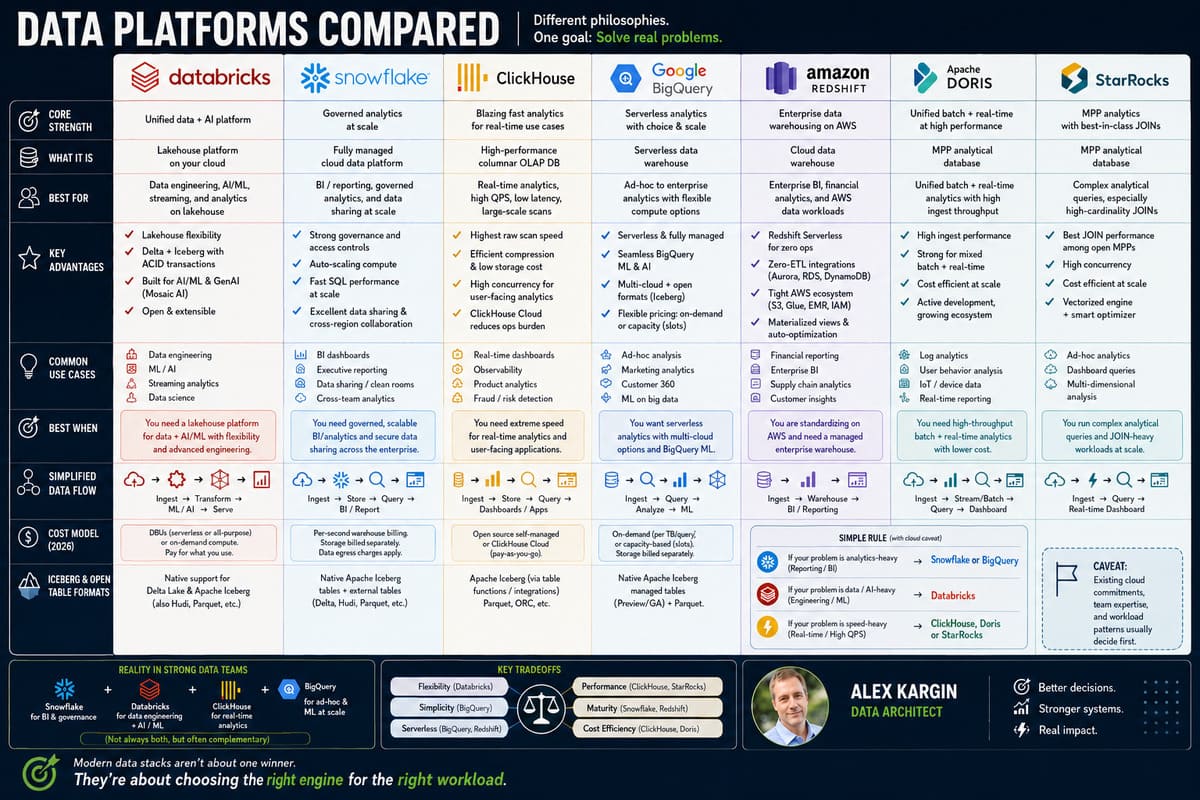
Delta Lake, Apache Iceberg, and LakeDB
When evaluating an upgrade from legacy systems:
- Delta Lake: ACID transactions on data lakes, but typically requires integration with Spark.
- Apache Iceberg: scalable table formats with schema evolution, but may lack native transactional support.
- LakeDB: natively handles buffering, caching, and write operations, reducing dependency on external engines and streamlining real-time analytics.
Migrating legacy systems
A simplified example of a migration from a traditional data warehouse to a LakeDB platform:
-- Create a LakeDB table with native buffering and caching enabled
CREATE TABLE transactions_lakedb (
  transaction_id STRING,
  amount DECIMAL(10, 2),
  transaction_date TIMESTAMP,
  customer_id STRING,
  -- Additional columns as needed
)
WITH (
  buffering = TRUE,
  caching = TRUE,
  vector_index = TRUE -- Enables advanced analytics features
);

-- Migrate data from legacy system to LakeDB
INSERT INTO transactions_lakedb
SELECT *
FROM legacy_transactions
WHERE transaction_date >= '2023-01-01';

-- Query with secondary indexing and vector search capabilities
SELECT transaction_id, amount, transaction_date
FROM transactions_lakedb
WHERE vector_similarity(customer_profile, 'sample_vector') > 0.85;
Before committing, evaluate current pipelines and identify bottlenecks in transaction handling and analytics. A phased migration lets you test the benefits of reduced latency and streamlined operations before fully cutting over.
Takeaway
LakeDB represents a shift in data management: combining the scalability of data lakes with the efficiency of databases to address the limits of legacy warehouses for real-time analytics and AI-driven work. For data and ML engineers, it offers a path to simpler architectures and lower cost - best validated with a pilot project that compares performance and cost efficiency against an existing data warehouse setup.


Leave a Comment