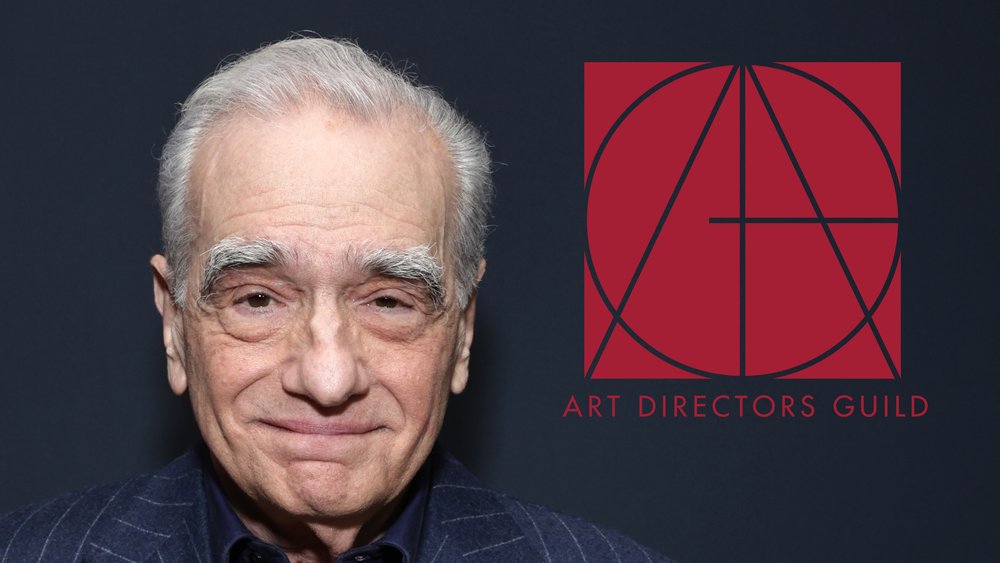
Martin Scorsese's appointment as an advisor to Black Forest Labs has drawn sharp criticism from the Art Directors Guild (IATSE Local 800), which represents the artists and designers whose workflows are directly targeted by the company's generative AI tool, FLUX. The Guild's statement, released Tuesday, frames the collaboration as a fundamental breach of trust in a profession built on iterative human collaboration.
The core technical dispute centers on pre-production visualization. Scorsese, in promoting FLUX for storyboarding, argues that generative AI can compress the feedback loop between director and art department—reducing time and cost without sacrificing quality. The tool ingests reference imagery and produces storyboard frames, ostensibly to communicate directorial intent more efficiently. From an engineering perspective, this replaces a multi-party design pipeline (sketching, revision, color keying, perspective matching) with a single inference step.
The Guild's objection is twofold: first, that FLUX's training data almost certainly includes copyrighted artwork scraped without consent, raising provenance and licensing issues that remain legally unresolved. Second, that the tool bypasses the structured collaboration that produces coherent visual language—a process that involves production designers, set designers, and illustrators iterating on mood, scale, and continuity. The system effectively abstracts away domain expertise in exchange for speed.
Scorsese's defense—that cinema has always adopted new technology, from 3D to de-aging—sidesteps the labor substitution problem. For data engineers, this is a classic trade-off between automation and model fidelity: a generative model can produce plausible storyboards, but it cannot reason about physical set constraints, budget, or narrative subtext. Whether the efficiency gain justifies the loss of human judgment depends on how tightly you define the problem.
The broader context: SAG-AFTRA's endorsement of the Trump administration's AI policy framework signals industry interest in regulatory guardrails, but no legislation has materialized. For now, the engineering community watches as a legendary director bets on generative models to solve a communication problem that many argue was never broken.
Source: Deadline