Nvidia's Q1 FY2026 earnings landed well above analyst consensus, with data center revenue hitting a record $75.2 billion—up 92% year-over-year. Total revenue reached $81.62 billion, beating the $78.86 billion forecast, while earnings per share came in at $1.87 versus the expected $1.76. The numbers reinforce a simple architectural reality: large-scale AI inference and training pipelines remain heavily dependent on Nvidia's GPU fabric.
CEO Jensen Huang framed the demand as a function of "agentic AI" workloads moving from prototype to production, driving what he called "the largest infrastructure expansion in human history." Whether or not you buy the rhetoric, the capex numbers are real. US hyperscalers are collectively planning roughly $750 billion in AI infrastructure spend this year, a significant portion allocated to GPU clusters. Huang expects Nvidia's growth to outpace hyperscaler capex expansion—a bullish signal that assumes continued GPU scarcity and premium pricing.
On the engineering side, the Vera Rubin platform, slated for H2 2026, is positioned as a generational leap in compute density. Huang noted that supply constraints will likely persist throughout Rubin's lifecycle—a familiar bottleneck for teams building large-scale training clusters. Meanwhile, Nvidia faces growing competition from in-house silicon efforts at Amazon and Google, though neither has yet matched the software ecosystem lock-in of CUDA.
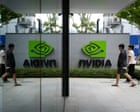
Geopolitical friction adds another variable. The Trump administration approved H200 exports to China with a 25% tariff, but CFO Colette Kress confirmed zero data center compute revenue from China this quarter. Chinese regulatory approval remains uncertain, leaving a significant addressable market in limbo. On the flip side, Nvidia is expanding in Southeast Asia, launching a Singapore research hub focused on improving AI infrastructure efficiency—likely targeting power and cooling optimization for dense GPU deployments.
For data and ML engineers, the takeaway is straightforward: plan for continued GPU scarcity, budget for premium pricing, and watch for regional supply chain shifts as Nvidia navigates export controls. The hardware roadmap suggests another 18-24 months of aggressive cluster buildouts before next-gen platforms ease the bottleneck.
Source: The Guardian