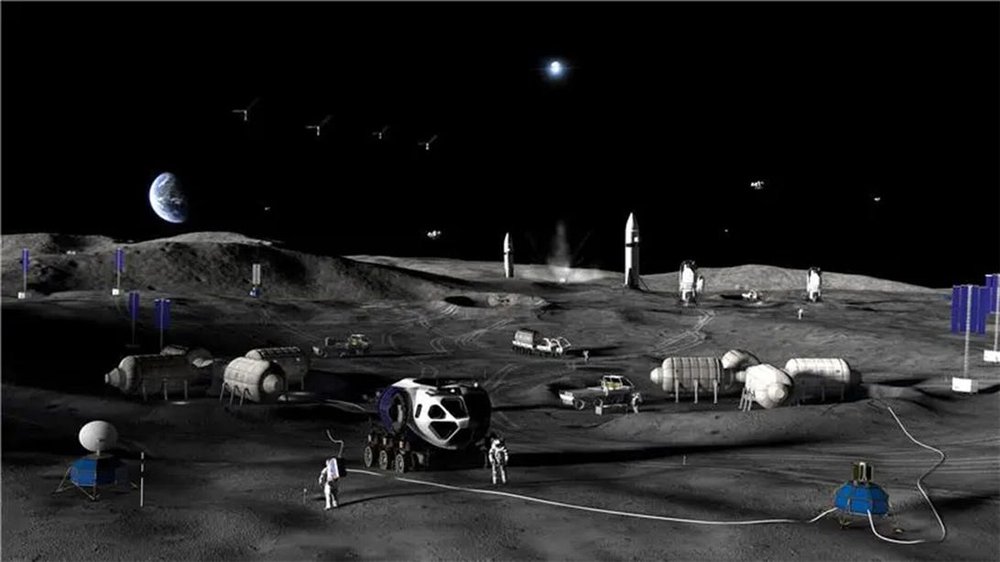
NASA is overhauling its lunar strategy, trading the planned Lunar Gateway orbiter for a direct shot at a permanent moon base. Announced Tuesday, the new "Ignition" program aims to establish a surface presence before President Trump's term ends in 2029.
Administrator Jared Isaacman outlined a seven-year, $20 billion roadmap divided into three phases. Instead of one-off missions, the agency will adopt a templated approach to accelerate learning through rapid experimentation. Phase one focuses on iteration, followed by semi-habitable infrastructure, then permanent construction. The Lunar Gateway, previously scheduled for 2027, will be halted and potentially repurposed for surface operations.
Isaacman emphasized execution over planning, stating, "This is about action right now... We want to get moving." The urgency stems from great-power competition, with China targeting a human landing by 2030.
Beyond the moon, Ignition covers replacing the ISS before 2030 and launching "SR-1 Freedom," a nuclear-powered Mars spacecraft, in 2028. Meanwhile, data-heavy projects like the Nancy Grace Roman Telescope are already ahead of schedule and under budget. Recent wins in asteroid deflection and solar study highlight efficient milestone tracking.
This pivot mirrors recent Artemis adjustments, prioritizing speed and tangible output. While the moon base dominates the headlines, Isaacman noted thousands of backend projects are underway. The message to the aerospace industry is clear: stop waiting for perfect slides and start building systems that work. The templated strategy suggests a future where modular design and rapid iteration trump lengthy preliminary orbits.
Source: CNET