More than 64% of valid secrets discovered in 2022 were still working in January 2026, according to GitGuardian's State of Secrets Sprawl 2026 research - a four-year gap driven largely by teams stalling on what a revocation might break.
The hesitation is understandable. A security engineer who finds an exposed credential can see it is valid and dangerous, but usually cannot tell which services will fail if it is revoked. Developers who know where a key is used are busy shipping features, and alerts showing only a file path and secret type often sink into the backlog. Application security, identity and access management, platform engineering and endpoint teams each see only part of the picture.
Validity alone is an incomplete triage signal. The same research found validity-only prioritization misses 46% of critical secrets, such as custom API tokens and SSH keys, because they cannot be verified automatically. Prioritizing by impact - weighing what a credential can access and whether it leaked publicly - and updating the risk score as new context arrives gives responders a clearer picture.
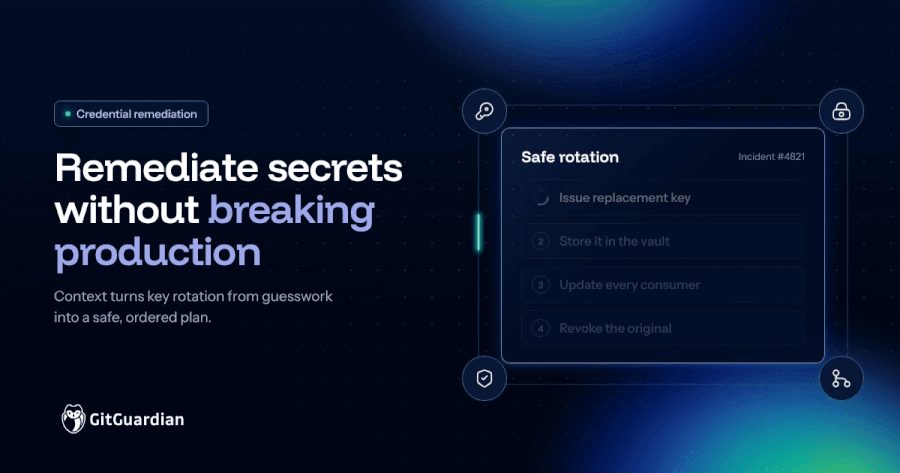
The safe order for rotation matters. Issue a replacement credential, store it in the vault, and switch every known consumer to the vault call. Deploy and monitor, ready to roll back if something breaks. Only when all systems are consuming the new vaulted credential should the original be revoked and confirmed to no longer authenticate. Getting this out of order turns a security fix into an incident.
Closing a ticket requires verifiable confirmation that the old credential no longer authenticates, plus an audit trail of what was fixed and how. Incidents closed while the credential remains valid deserve their own review - a common case when one team rotates a key in its system while the old key stays active elsewhere.
Source: The Hackers News