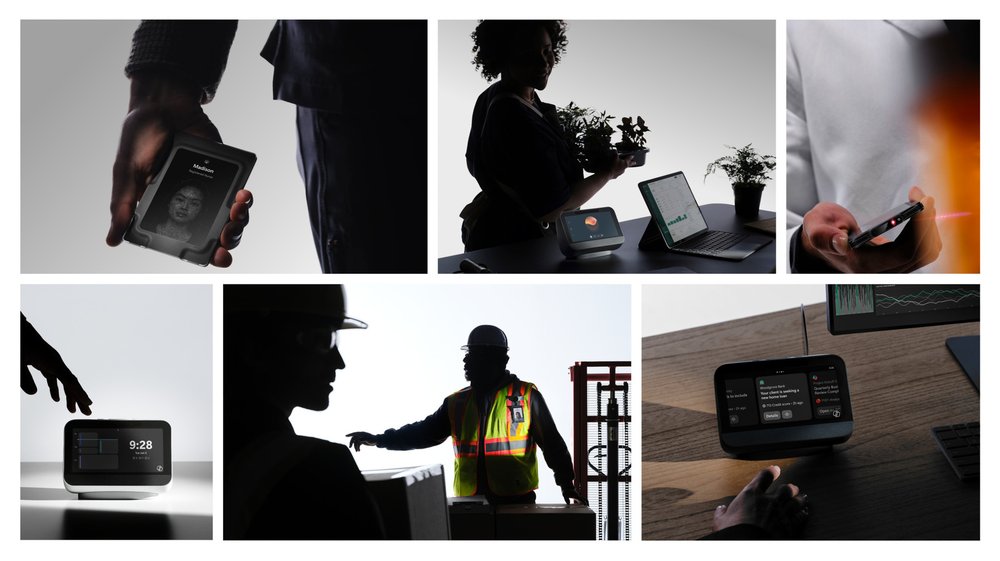
At Build 2026, Microsoft pulled back the curtain on Project Solara, its bet on a unified platform for AI agents—a direct answer to the shift from app-centric to agent-centric computing. The company demoed two reference devices: a smart display reminiscent of an Echo Show, and a smart key badge with a touchscreen and camera. Both run on Solara, which Microsoft intends as the underlying OS for a new class of hardware.
From a data engineering perspective, Solara’s architecture leans heavily on Microsoft 365 as its data backbone. The smart display pulls live calendar events from Outlook, queries Excel tables, and accepts voice commands to trigger actions—presumably via Graph API calls and event-driven pipelines. The badge extends this to mobile contexts, using its camera as a sensor input for on-the-go data capture. The engineering challenge here is latency: agents must resolve user intent, fetch relevant data from distributed cloud services, and execute tasks in near real-time, all while maintaining consistency across devices.
Trade-offs are apparent. Tight integration with Microsoft 365 means Solara benefits from existing data schemas and authentication, but risks vendor lock-in for third-party developers. The badge’s camera input adds a new ingestion path, but raises privacy and bandwidth concerns. Microsoft’s concept video suggests agents can act autonomously, but in practice, this requires robust decision logic and fallback mechanisms for ambiguous requests. For practitioners, Solara represents a shift from building single-purpose apps to designing event-driven, multi-modal agent pipelines—a move that demands rethinking data flow, state management, and error handling at the edge.
Source: Engadget