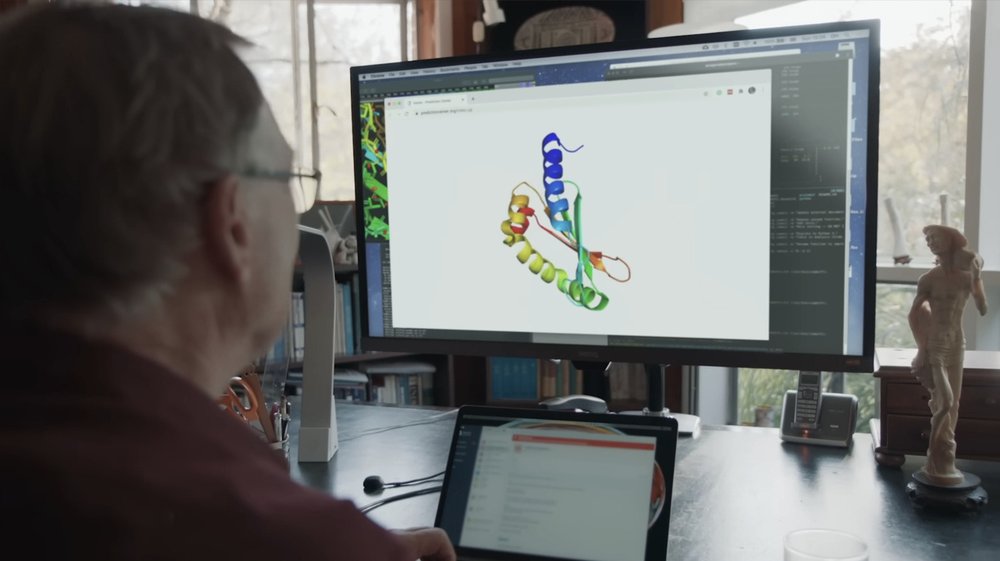
Google has quietly disbanded the Nobel Prize-winning AlphaFold team, redirecting the DeepMind unit’s top machine learning engineers and data scientists toward Gemini development. According to the Financial Times, key authors of the original AlphaFold papers have been reassigned internally, while several others—including lead architect John Jumper—have left the company for Anthropic. For the data and ML engineering community, this marks the end of one of the most impactful applied AI projects in structural biology, and a clear signal that Google is betting its research muscle on large language models.
AlphaFold’s engineering legacy is remarkable. The team trained a transformer-based architecture on a curated dataset of roughly 170,000 known protein structures, combining multiple sequence alignment features with physical constraints to predict 3D coordinates from amino acid sequences. In 2021, they released the AlphaFold Protein Structure Database, a public repository of over 200 million predictions that became a go-to resource for drug discovery and disease research. The model’s ability to solve the “protein folding problem”—a 50-year-old challenge—was recognized with the 2024 Nobel Prize in Chemistry for DeepMind CEO Demis Hassabis and John Jumper.
The shift in resources is not subtle. Jumper left for Anthropic in June, taking several colleagues with him. DeepMind has confirmed that remaining staff were moved to Gemini-focused projects or to Isomorphic Labs, Alphabet’s drug-discovery spin-off. Pushmeet Kohli, VP of research at Google DeepMind, explained the strategic pivot: “Our strategy over the last nine years has been to focus on grand challenges… a concrete goal every project is focused on. The strategy has evolved.” For ML engineers, the takeaway is clear: Google is consolidating its talent and compute toward generative AI, and even a Nobel-winning project can be deprioritized when the corporate focus shifts.
Source: Engadget