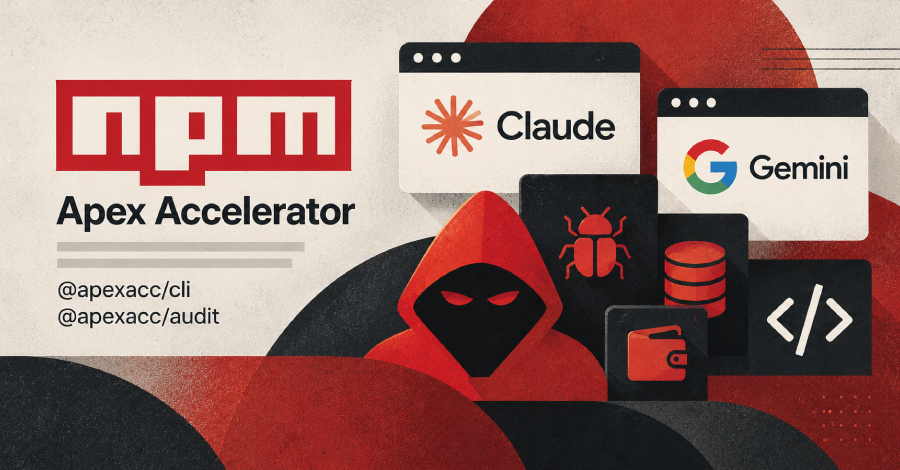
A fraudulent Web3 accelerator called Apex Accelerator has been distributing information stealers and backdoors to Windows and macOS machines through malicious npm packages, according to Elastic Security Labs researchers Jia Yu Chan and Daniel Stepanic. The packages were pitched as offering free AI credits for Anthropic Claude and Google Gemini, coding tools, and security audits.
The operation, tracked as REF8801, targeted cryptocurrency startups and founders. Two packages, @apexacc/cli and @apexacc/audit, were published by an npm user named "apexaccelerator" and linked to a GitHub account called "apexaccs" and the Apex Foundation. Both the packages and their repositories are no longer accessible.
The packages delivered no promised functionality. The audit tool's 18 security tools generated fabricated findings, while the CLI's scoring test returned an unsupported assessment of a fictitious project. Instead, they spread a macOS backdoor called CloudSyncD and a custom Windows stealer that exfiltrates data through Telegram.
The campaign is not new. In late July 2026, SafeDep detailed three other npm packages tied to the same operation that distributed a macOS stealer from the Atomic Stealer family. Internet Archive snapshots from March 19, 2026 show the foundation claiming to offer $235,000 investments and grants.
Elastic said the group sought credibility through appearances at TOKEN2049 in Singapore and other in-person events. Russian-language comments appeared in the source code commit history, but researchers said the clues are not sufficient to establish identity or origins.
Beyond malware, the packages could intercept and redirect OpenRouter LLM traffic and register an attacker-controlled MCP server in the victim's agent configuration, giving attackers visibility into prompts, conversation history, code snippets, and tool outputs, plus a way to influence the agent's actions.
Source: The Hackers News