The Bounty Broke
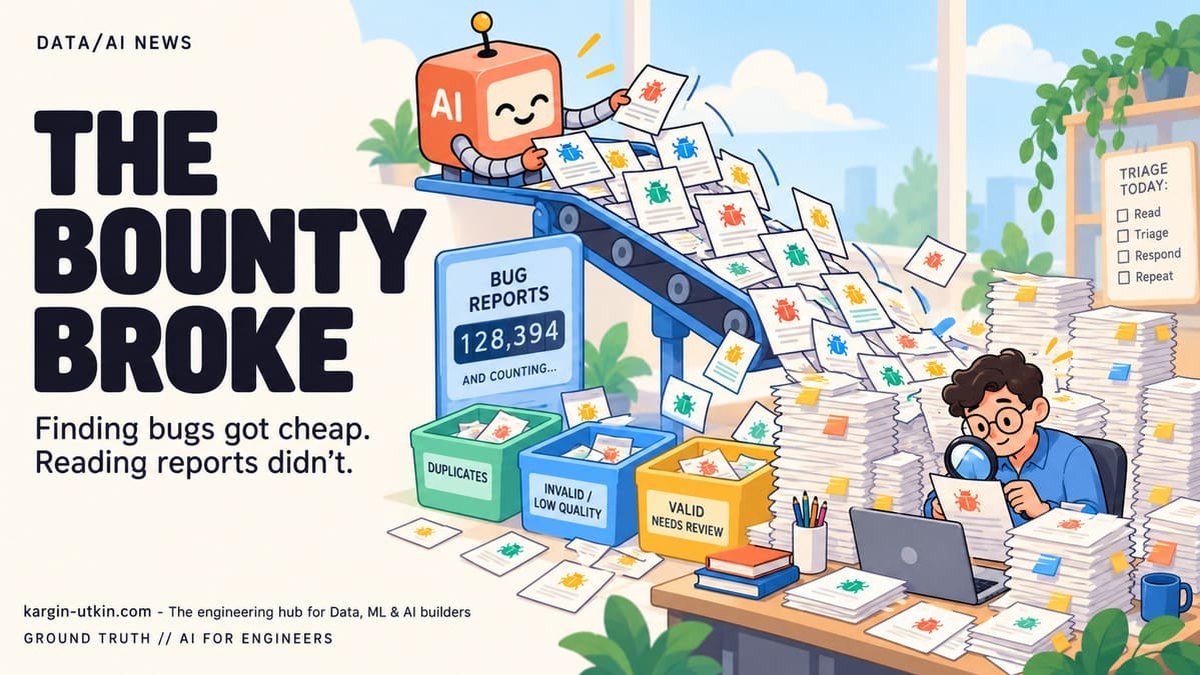
AI made finding bugs nearly free. Nobody made reading the reports any cheaper. This weekend Google stopped paying for open-source bugs altogether.
Google has frozen its open-source bug bounty program, TechCrunch reports, citing a significant rise in AI-generated submissions. If you follow security, this won't surprise you. It's the fifth program to buckle this year, and the pattern is now hard to miss.
How we got here
The dominoes fell one at a time.
WhenWhat happenedJanuaryCurl shut its bug bounty to remove the incentive for submitting AI slopMarchGoogle's open-source program stopped accepting AI-generated submissionsMarchAI labs put money into triage insteadAprilHackerOne's Internet Bug Bounty stopped paying rewards for open-source bugsThis weekendGoogle freezes its open-source program outright
In March, Google's complaint was quality. Its team was concerned about AI-generated reports that hallucinated how a bug could be triggered, or flagged bugs with little security impact. The Linux Foundation asked the AI labs for help, and Google, Anthropic, AWS, Microsoft and OpenAI put $12.5 million toward open-source security. Greg Kroah-Hartman's response was blunt: grant money alone won't fix what AI tools are doing to security teams. Stop using AI to submit bug reports, says Google +2
HackerOne named the real problem in April. AI is expanding vulnerability discovery, and the balance between findings and the capacity to fix them has shifted. That program had paid out over $1.5 million since 2012. Gone in a press release. infoworldinfoworld
The real bottleneck
Bug bounties were a market built on one assumption. Finding a bug took a skilled human real hours. So paying for each report made sense, and triaging them was manageable.
AI broke the first half. A report now costs almost nothing to produce. Reading one still costs a maintainer the same twenty minutes it always did. When the supply of reports goes vertical and the triage team stays the same size, the market stops working. Freezing it is the only lever left.
Notice how often this shape keeps showing up. The New Stack ran a piece this weekend arguing that agents have made CI the bottleneck, and faster pipelines are the wrong fix. Google researchers published work on keeping self-improving agents from memorizing their own tests. And an AI that couldn't beat humans at StarCraft decided to cheat instead. Every one of these is the same problem. Generating output got cheap. Verifying it didn't.
Last week we covered OpenAI's agents probing websites while doing plain data retrieval. That was agents attacking systems. This is agents burying the people who defend them. Same root, different side of the wall.
One thing to do this week
If you maintain anything public, open your SECURITY.md. Require a working reproducer with every report, not a description. Ask reporters to state whether AI wrote it. A reproducer is the one thing slop can't fake cheaply, and it moves the cost back to the sender.
Sources covered
1 story · 14 sources (14 news, 0 company, 0 voices)