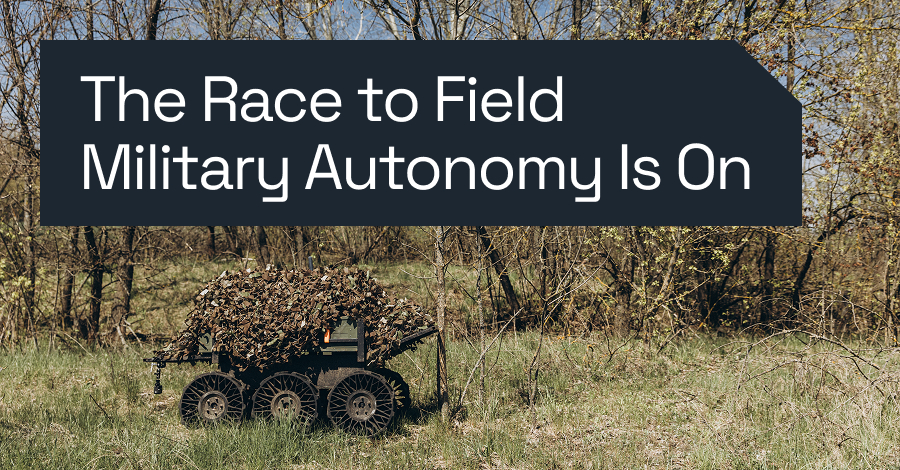
The push to field autonomous military systems is moving faster than ever. From the U.S. and UK to NATO, new funding, revamped defense strategies, and faster procurement paths are reshaping how capabilities go from concept to deployment. The goal is to match commercial speed, but that speed creates a new challenge: the information backbone that lets these systems work together in real time.
Autonomous drones, uncrewed ships, ground robots, satellites, and AI-driven mission tools all rely on a constant flow of telemetry, intelligence, command data, and sensor-to-shooter links. That data must move seamlessly across platforms, security levels, and allied networks. The future force won’t be defined just by the number of autonomous systems, but by how well the underlying information infrastructure connects them. In the UK, over £5 billion in planned investment places autonomy at the heart of future force design, while AUKUS and NATO accelerate allied collaboration.
For program leaders, the direction is clear: field capability faster, integrate commercial innovation sooner, and maintain mission effectiveness. But many conversations still focus on platforms—how many drones, how fast can they deploy, how AI boosts performance. The real value comes when these systems operate as part of a connected mission. That requires trusted information to move securely across the entire architecture, not just within a single network or classification. Traditional approaches that rely on years of bespoke integration won’t keep pace. Hardware-enforced separation, long used in high-assurance environments, offers a way to establish trust at the hardware level, reducing complexity while enabling rapid adoption of autonomous capabilities.
Source: The Hackers News