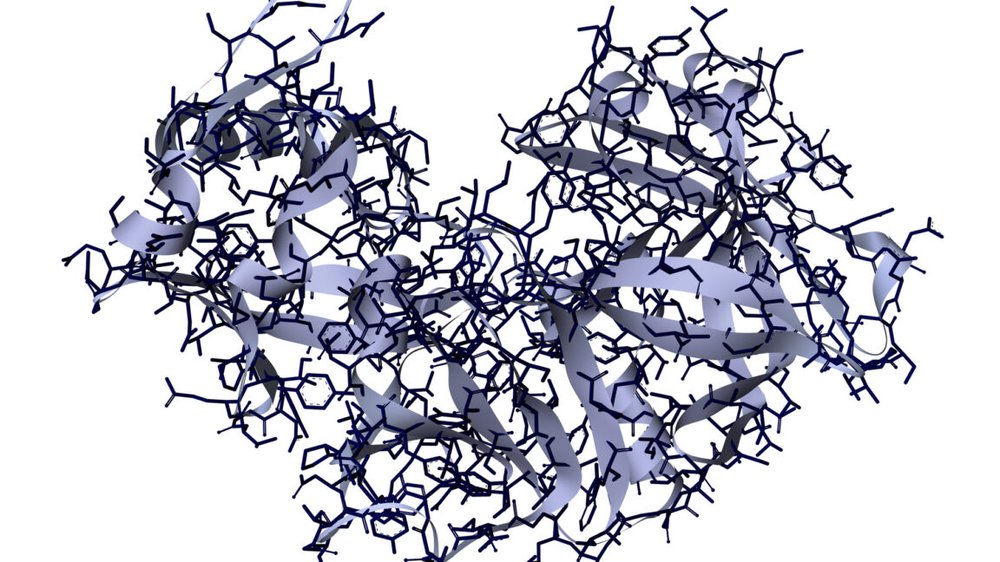
Proteins are chains of amino acids linked by peptide bonds, and those bonds are remarkably tough on their own-estimated to last several hundred years in water. Yet in nature, proteins rarely survive that long, because organisms have evolved enzymes called proteases that catalyze the breakup of peptide bonds. Proteases are widespread and typically make quick work of proteins they encounter.
Now researchers have compressed that evolutionary process, using AI-based protein design tools to take the catalytic core of two types of protease and replace the rest of the protein, according to Ars Technica. The resulting enzymes could be tuned to cut specific proteins in half, and the team showed their effectiveness by using them to cut proteins linked to neurological diseases.
The chemistry behind the work is straightforward. A peptide bond forms when an amino group links to an acid, releasing a water molecule; breaking the bond reverses that process and requires an enzyme to happen with any frequency. The research relied on two catalytic mechanisms, one of them a zinc protease, in which the positive charge of a zinc atom coordinates the peptide bond being broken, key parts of the protease, and a water molecule. The protease partially pulls a proton off the water molecule, activating it to attack and break the peptide bond.
Source: Ars Technica