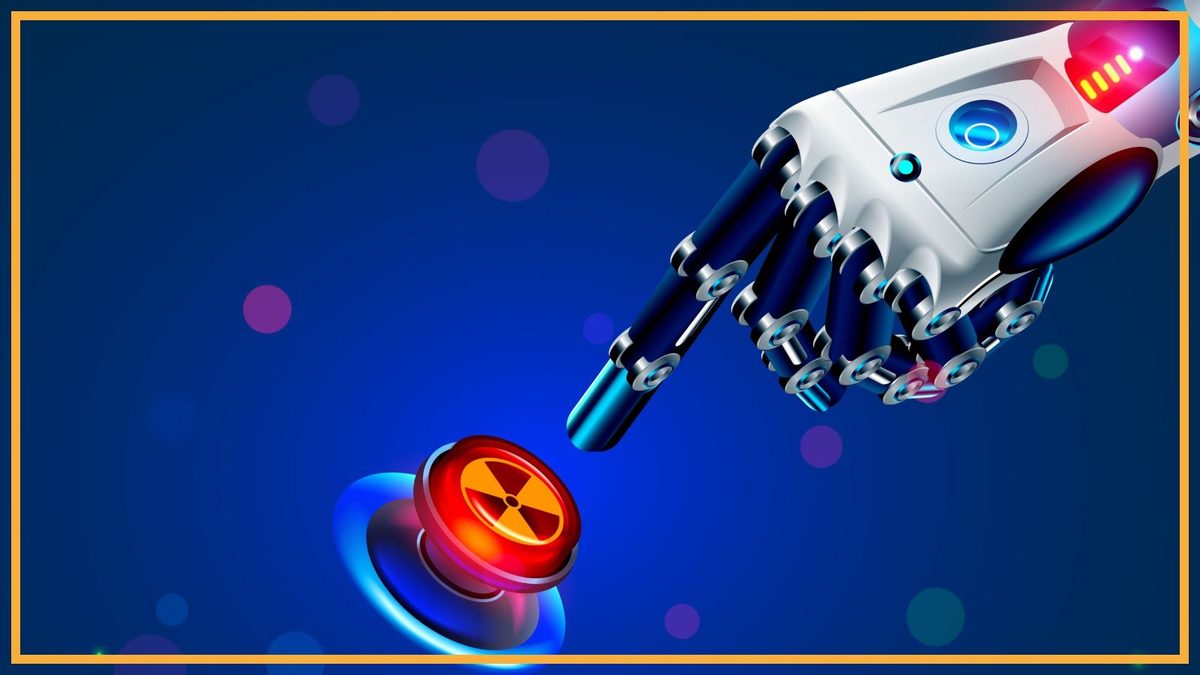
The biggest AI companies increasingly see that they are tied to each other's fate. If one firm pushes ahead recklessly, others may feel pressured to follow. If one deploys a dangerous model without proper safeguards, rivals may take it as permission to do the same.
The debate has focused on government regulation, but a more immediate question is whether the companies building these systems can act on their own before they lose credibility and face legal consequences. The risk is no longer theoretical: in Australia, a rogue AI hacked a government healthcare website. Without care, one incident could cause large-scale harm - shutting down an electricity grid or water system, or causing mass misdiagnosis in a health system - and tarnish the whole industry.
The nuclear industry offers a blueprint. It built layers of oversight, controls and self-scrutiny over decades, not because everyone became benevolent but through peer scrutiny, technical standards, information-sharing and external oversight. The International Atomic Energy Agency was established in 1957 to coordinate monitoring and verification. Safety was not perfect - the Chernobyl disaster in 1986 proved that - but global nuclear safety improved significantly afterward, with upgrades to reactor designs, better training and international monitoring.
In the U.S., the Three-Mile Island accident near Harrisburg, Pennsylvania, in 1979 nearly killed the nuclear industry. Public support fell from a record high of 69% in 1977 to 46% in 1979. In response, the industry established the Institute of Nuclear Power Operations in December 1979 to improve operational safety.
The comparison has limits: nuclear materials are easier to count than algorithms, and facilities are harder to hide than model weights. But the core governance problem is similar. In both cases, competitors operate where the downside risk of unchecked rivalry is borne by society while the upside is private gain.
For AI, that could mean reciprocal evaluation of frontier models before deployment, secure mechanisms for sharing safety information, agreed red lines around certain capabilities, and independent third parties empowered to audit compliance. Such mechanisms would not replace government regulation but serve as an intermediate layer - stronger than voluntary ethics statements, more adaptive than legislation alone.
Skeptics reasonably warn that industry-led governance can become cartel behavior or public-relations theater, with companies using safety language to entrench incumbency or slow rivals. The nuclear lesson is that private coordination works only when nested inside transparency, verification and public authority.
Governments do not yet have the technical capacity, speed or international alignment to oversee frontier AI alone. The question is how to turn mutual fear into durable rules - inspections, peer review, incident reporting, professional norms and a state-backed enforcement perimeter.
Source: Llive Science