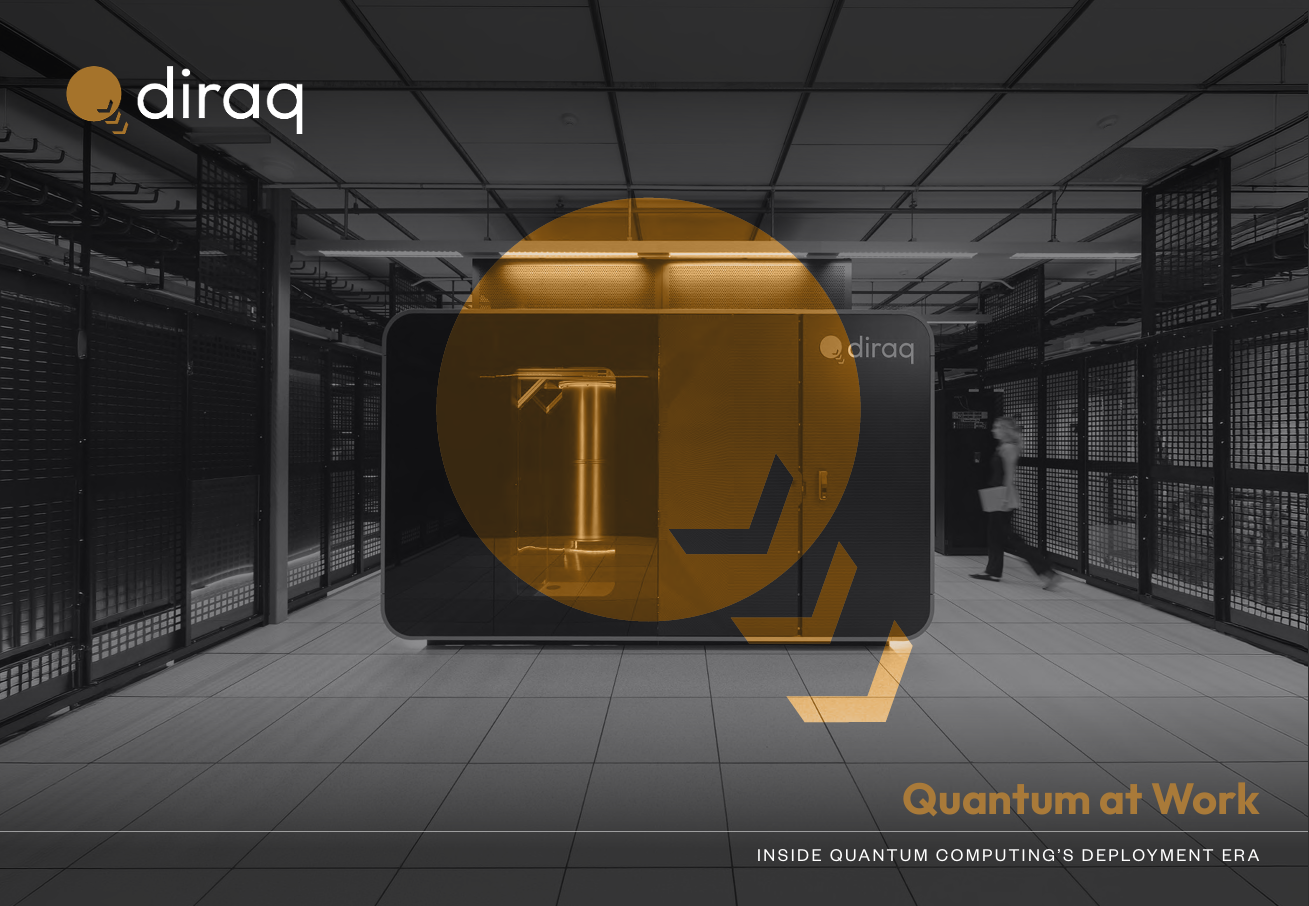
As quantum computing moves into the everyday infrastructure that businesses rely on, Diraq has published Quantum at Work, a report exploring how the technology could be put to work on some of the world's hardest problems including medicine discovery.
This report examines what changes when quantum is judged not only by scientific progress, but by usefulness, economics, scale and deployment.
Quantum computing is entering a new phase. After decades focused on proving the science, the next test is whether quantum computers can solve valuable problems, scale economically and operate in real-world environments.
The economics have to stack up. By improving lead optimization, a quantum computer could slash the cost of developing a single medicine by up to a third, lifting success rates by 10 percentage points to save more than $600 million per medicine and allowing more potentially lifesaving drugs to reach patients each year.
Scale doesn't have to mean scaling the infrastructure. Because Diraq's qubits are built from modified silicon transistors, capability scales on the chip rather than the facility. Diraq is targeting 150,000 qubits by 2029 and more than two million on a single chip by 2031, with an energy footprint for its utility-scale system peaking at a modest 300 kW.
Deployment is already beginning. In 2026 Diraq deployed an eight-qubit system inside Equinix’s live commercial data center, the world's first silicon-spin system in a shared commercial facility. Diraq is targeting up to 256 qubits over the next year, with the system designed to scale primarily through a chip replacement, without major changes to the existing infrastructure.