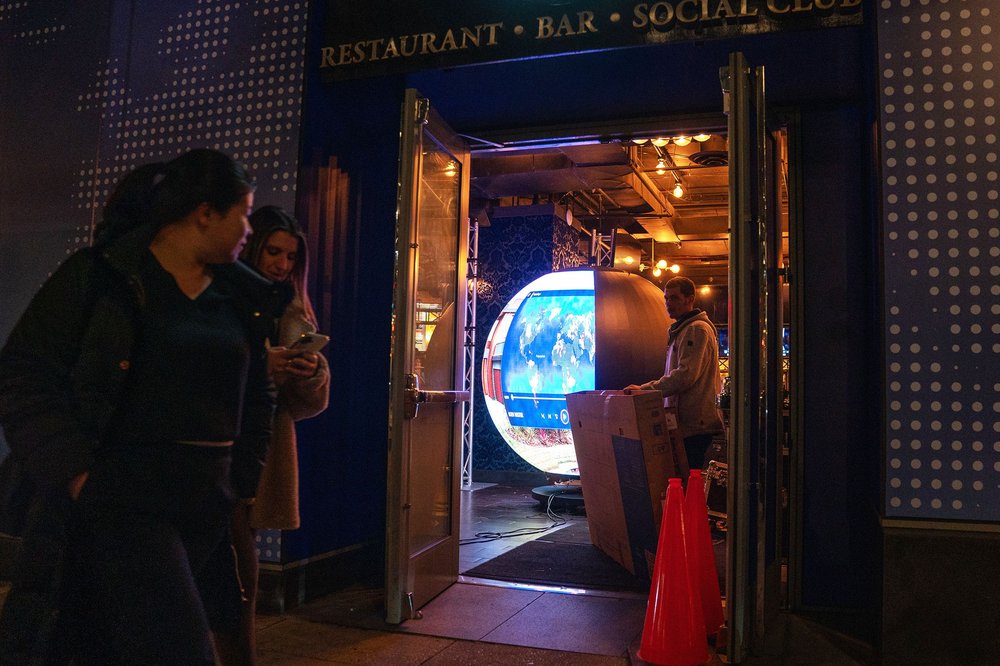
Polymarket promised Washington a physical hub for real-time prediction data. Instead, the crypto betting platform delivered a case study in infrastructure failure. The "Situation Room," a three-day pop-up bar intended to showcase live global markets, struggled with basic connectivity from opening night.
Neil Kumar, Polymarket's chief legal officer, framed the venue as a bridge between DC policy and decentralized finance. Yet, for ninety minutes, guests waited outside while staff manually took drink orders because internal systems lagged. Joshua Tucker, head of growth and former marketer for MrBeast, prioritized spectacle over stability. Dozens of monitors meant to display Bloomberg terminals and live X feeds remained black. When they finally lit up, power issues killed the display by Saturday evening.
For data engineers, the irony was sharp. A platform built on oracle accuracy and real-time aggregation couldn't sustain a local video wall. Nick O'Neill, a creator flying in to film data-driven betting strategies, found nothing to capture but dark screens. Actual users agreed. William, a military member trading on competitor Kalshi, had wagered on political markets regarding President Trump's weekly statements. He noted the setup offered no analytical value. Dylan, a student betting on crypto prices, called it "fun for a laugh" but useless for serious analysis.
This stumble comes shortly after Polymarket re-entered the US market via a QCEX acquisition, following a prior CFTC ban. With administration officials reportedly attending, reliability matters more than memes. While an interactive orb visualized live bets like "US alien confirmation by 2027," the core promise—accessible, reliable information—flickered out. In engineering terms, the uptime SLA wasn't met. Polymarket proved prediction markets are popular, but their physical infrastructure still needs debugging.
Source: Wired