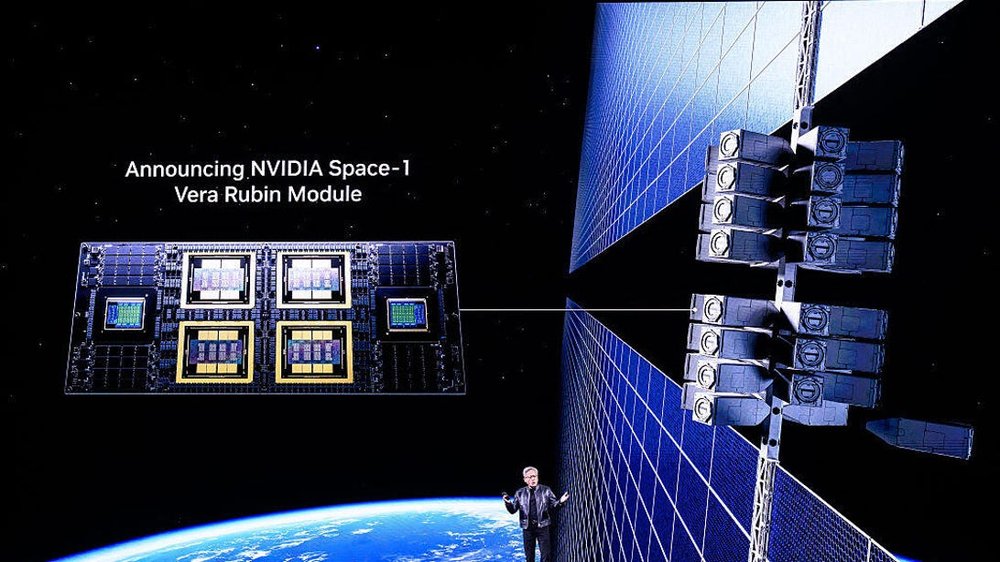
In a bold technical challenge, Nvidia is designing a computer intended to operate an artificial intelligence data center in orbit. CEO Jensen Huang outlined the project, named the Space-1 Vera Rubin module, during his keynote at Nvidia's GTC conference this week.
The core obstacle isn't software, but fundamental physics. "In space, there's no conduction, there's no convection, it's just radiation," Huang explained. Designing a system to dissipate the immense heat generated by its processors in a vacuum is the primary engineering hurdle.
While Nvidia components are already aboard satellites, a full-scale orbital data center presents a different order of complexity. The space environment, however, offers potential benefits: ample solar power and a lack of terrestrial logistical constraints.
The company isn't alone in looking skyward. Elon Musk, whose ventures span rocket launches and AI development, has frequently discussed the concept of space-based data centers. The idea is gaining traction as Earth's orbit becomes a more active domain for both communication and computation.
If successful, Nvidia's work could establish a new architectural paradigm for where and how the most demanding machine learning workloads are processed, pushing the infrastructure of the digital age literally beyond the atmosphere.
Source: CNET