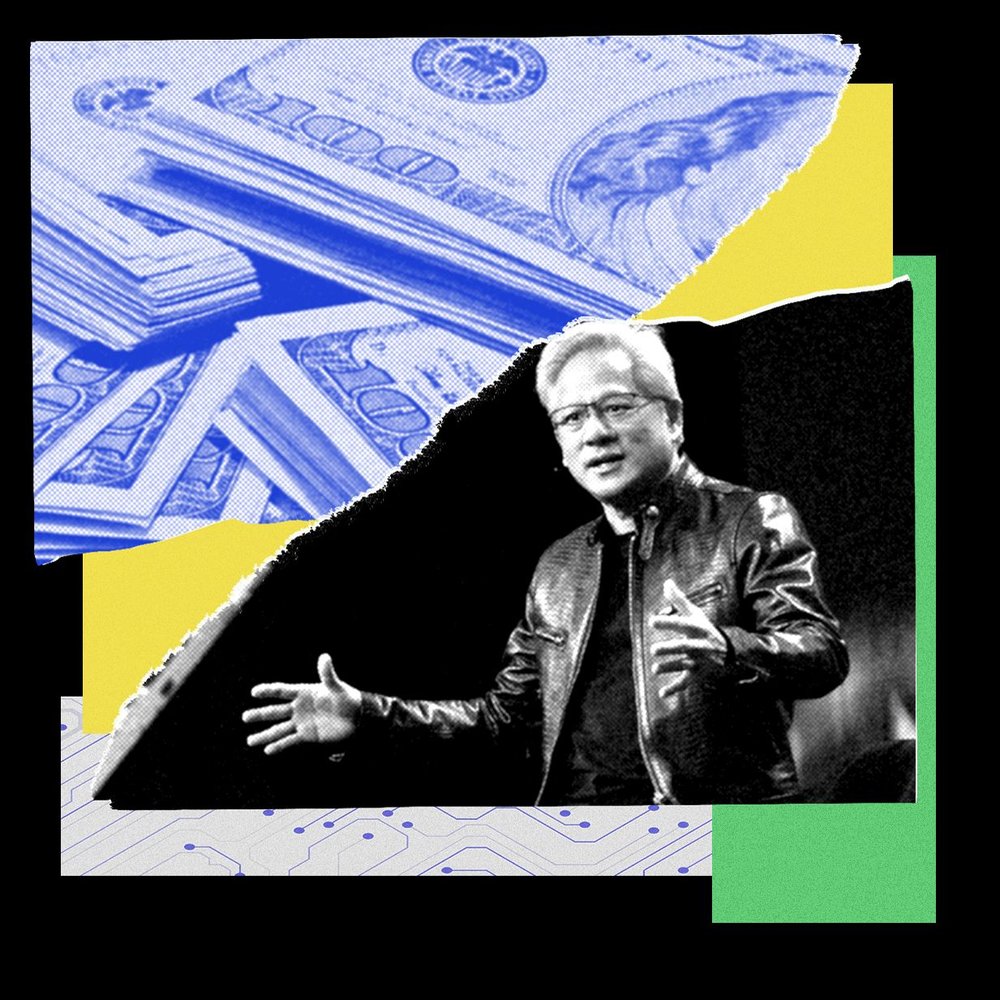
Nvidia has committed $26 billion over the next five years to develop open-weight artificial intelligence models, according to a 2025 financial filing and executive interviews. This massive investment signals the chip giant's intent to become a primary developer of frontier AI systems, directly competing with labs like OpenAI and DeepSeek.
The strategy is twofold: advance the field of open AI and reinforce demand for Nvidia's hardware, as these models are optimized for its chips. The company defines 'open-weight' as releasing the core parameters that dictate a model's behavior, alongside architectural and training details. This allows external researchers and companies to run, modify, and build upon the technology independently.
This week, Nvidia launched Nemotron 3 Super, a 128-billion-parameter model it claims outperforms OpenAI's GPT-OSS on several benchmarks. The company also disclosed novel training techniques that enhance reasoning and long-context handling. Bryan Catanzaro, Nvidia's VP of applied deep learning research, stated the move reflects a serious commitment to open development.
The open-model arena has become a point of global competition. While U.S. leaders like OpenAI and Anthropic keep their best models proprietary or cloud-locked, several top Chinese models from DeepSeek and Alibaba are freely available. This has led many global researchers to build on Chinese foundations. Nvidia's investment creates a significant U.S.-based counterweight.
Internally, the project serves as a rigorous test for Nvidia's own data center systems, informing future hardware design. The long-term play is defensive, too; the rise of high-performing models trained on rival hardware, like Huawei's, could challenge Nvidia's market dominance. By seeding the ecosystem with its own open models, Nvidia aims to maintain its central role.
Andy Konwinski of the Laude Institute notes the move's significance, given Nvidia's unique position at the crossroads of countless AI projects. 'This is an unprecedented signal of their belief in openness,' he said.
Source: Wired