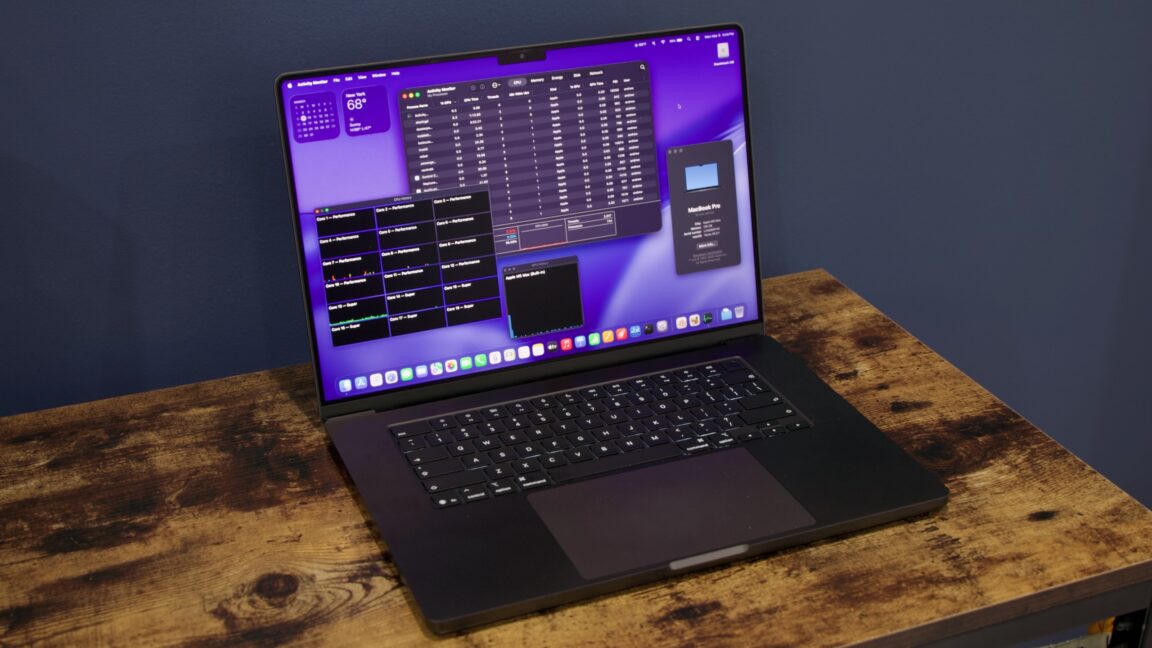
Apple's latest high-end processors, the M5 Pro and M5 Max, represent the most significant architectural shift in Apple Silicon since the move from Intel. For data and machine learning engineers, the changes under the hood are far more consequential than a simple speed bump.
The core innovation is a departure from a single, monolithic design. Apple now employs its 'Fusion Architecture' to pair two distinct silicon dies: one dedicated to CPU cores and system logic, the other housing the GPU cores and memory controller. This modular approach allows for more specialized optimization. Both chips share an 18-core CPU die, but the Pro pairs it with a 20-core GPU die, while the Max doubles that to 40 cores. Critically, the Max's integrated memory controller provides up to 614 GB/s of bandwidth, a vital asset for large model inference and data processing workloads.
Perhaps the most telling change is the elimination of traditional 'efficiency' cores in the Pro and Max models. They are replaced by a three-tier CPU system: the fastest 'super' cores (up to 6), a new tier of 'performance' cores (up to 12), and zero efficiency cores. This new 'performance' core is an entirely different design, not a rebranded efficiency core, indicating a clear focus on sustained, high-throughput computation.
For engineers, this means the M5 Max isn't just an iteration; it's a platform built for heavy parallel workloads. The decoupled architecture and massive memory bandwidth suggest Apple is designing with the demands of modern data pipelines and on-device ML in mind.
Source: Ars Technica