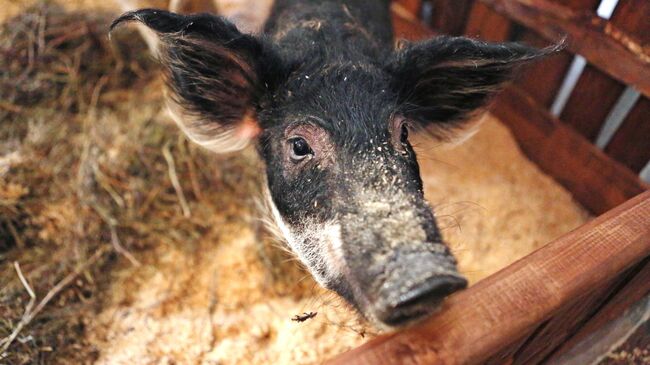
In a development poised to modernize animal husbandry, researchers have unveiled a non-invasive AI system that identifies individual pigs with remarkable precision. The technology, developed by an international team from Belgorod State University and Sh. Yessenov Caspian State University, achieves over 95% accuracy in identifying specific animals and 99.5% accuracy in detecting them in images—figures that reportedly surpass current benchmarks.
The system's core innovation is its 'open-set' recognition capability. Unlike conventional models that can only recognize animals they were trained on, this neural network can identify a new, unfamiliar pig in a herd and automatically add it to the database, all without retraining. It works by analyzing the unique biometric features of a pig's snout and face, treating them like a porcine fingerprint.
Once identified, the system tracks each animal's movements, feeding frequency, and meal duration through camera feeds. This continuous, contact-free monitoring allows for the early detection of health issues. The platform then generates practical alerts and recommendations for farm staff, such as adjusting feeding schedules or pen temperatures.
"Current methods often involve invasive tagging or sensors, which are costly and stressful for the animals. Our method requires no physical contact," explained project co-author Olga Ivashchuk.
The team is also developing a mobile application for real-time identification using a smartphone camera. Designed for scalability, the system is adaptable for small farms and large industrial complexes alike, offering a potential cornerstone for future digital livestock management platforms globally.
Source: RIA Novosti