Snowflake Administration & Configuration: A Field Guide for Busy Data Teams
Hook: Your Snowflake bill crept up again, the nightly ELT ran long, and security just asked “who can see PII in PROD?” If that sounds familiar, you don’t have a data problem—you’ve got an administration problem. This guide gives you a pragmatic, production-tested setup for Snowflake that keeps costs predictable, performance boring (in a good way), and auditors calm.
Why This Matters
Snowflake is deceptively simple: separate storage/compute, auto-suspend, pay-as-you-go. In practice, the “easy button” disappears once you juggle multi-env RBAC, network boundaries, secrets, PII controls, ingestion at scale, and cost guardrails. Good administration turns Snowflake from “fast demo” into “reliable platform.”
Core Architecture (Admin View)
Think in layers:
- Identity & Access (RBAC) – Roles, grants, least privilege, environment separation.
- Compute – Warehouses by workload class (ingest, transform, BI, ML), right-sized and auto-suspended.
- Data Governance – Databases, schemas, tags, masking/row policies, secrets (external access).
- Connectivity – Network policies, PrivateLink/Privatelink-equivalents, SSO, OAuth.
- Ops & Cost – Resource monitors, account parameters, usage telemetry, alerting.
Quick Map of Responsibilities
| Layer | What You Configure | Success Looks Like |
|---|---|---|
| RBAC | Roles, role hierarchy, grants | No user has direct object ownership; least privilege flows through roles |
| Compute | Warehouse sizes, queues, auto-resume/suspend | Stable runtimes, minimal idle cost |
| Governance | Tags, masking/row policies, databases | PII controlled by policy, not tribal knowledge |
| Connectivity | Network policy, SSO, key rotation | Only approved IPs/apps; easy off-boarding |
| Ops & Cost | Resource monitors, ACCOUNT_USAGE queries | No surprise invoices; actionable alerts |
Opinionated Baseline Configuration (SQL You Can Run)
1) Role Hierarchy (simple and auditable)
-- Top-level admin roles
create role PLATFORM_ADMIN;
create role SECURITY_ADMIN;      -- limit to security team
create role ACCOUNT_BILLING;     -- read-only billing

-- Environment segmentation
create role DEV_ENGINEER;
create role QA_ENGINEER;
create role PROD_ENGINEER;

-- Workload roles
create role ETL_RUNNER;
create role BI_READER;
create role DATA_SCIENTIST;

-- Set a clean default role for each user and avoid SYSADMIN for daily work
grant role SECURITY_ADMIN to role PLATFORM_ADMIN;
Best practice: Never grant object ownership to human users. Use one admin role to create objects, then immediately transfer ownership to a service role.
2) Warehouses by Workload Class
-- Ingest: bursty, parallel loaders
create warehouse WH_INGEST_XS with
  warehouse_size = 'XSMALL'
  auto_suspend = 60
  auto_resume = true
  max_cluster_count = 1
  statement_queued_timeout_in_seconds = 60;

-- Transform: steady, more memory; let it scale when needed
create warehouse WH_TRANSFORM_M with
  warehouse_size = 'MEDIUM'
  auto_suspend = 120
  auto_resume = true
  max_cluster_count = 2
  min_cluster_count = 1
  scaling_policy = 'ECONOMY';

-- BI/Ad-hoc: many small queries, prioritize concurrency over size
create warehouse WH_BI_S with
  warehouse_size = 'SMALL'
  auto_suspend = 60
  auto_resume = true
  max_cluster_count = 3;
Rule of thumb: Increase concurrency (clusters) for BI, size for heavy transforms, and keep ingest lean with strict auto-suspend.
3) Resource Monitors (cost guardrails)
create resource monitor RM_MONTHLY_BI
  with credit_quota = 500
  frequency = monthly
  start_timestamp = immediately
  triggers on 80 percent do notify
           on 100 percent do suspend;

alter warehouse WH_BI_S set resource_monitor = RM_MONTHLY_BI;
Pitfall: Monitors don’t retroactively refund overspend—set them before enabling a warehouse.
4) Governance: Tags + Masking + Row Policies
PII tagging
create tag SENSITIVITY allowed_values ('PUBLIC','INTERNAL','CONFIDENTIAL','PII');

alter table PROD.CUSTOMERS add tag SENSITIVITY = 'PII';
Tag-based dynamic masking
create or replace masking policy MP_PII_EMAIL as (val string) returns string ->
  case
    when current_role() in ('SECURITY_ADMIN','PROD_ENGINEER') then val
    else regexp_replace(val, '(^[^@])[^@]*(@.*$)', '\\1***\\2')
  end;

-- Apply via tag
alter tag SENSITIVITY set masking policy MP_PII_EMAIL;
Row access policy (geo-restricted views)
create or replace row access policy RAP_REGION as (country string) returns boolean ->
  current_role() in ('SECURITY_ADMIN') or country = current_account_region();

alter table PROD.SALES add row access policy RAP_REGION on (COUNTRY);
Best practice: Use policies + tags so governance is data-driven. Don’t hard-code table names into role logic.
5) Connectivity & Security
-- Block unknown IPs; allow office + VPN ranges
create network policy NP_CORP
  allowed_ip_list = ('203.0.113.0/24','198.51.100.0/24')
  blocked_ip_list = ('0.0.0.0/0');

alter account set network_policy = NP_CORP;

-- Require MFA, integrate SSO (done in UI/IdP), limit session length
alter account set
  client_session_keep_alive = false
, session_timeout_in_seconds = 3600;
Tip: Prefer SSO + SCIM for lifecycle (auto-provision/deprovision). Local users should be exceptions.
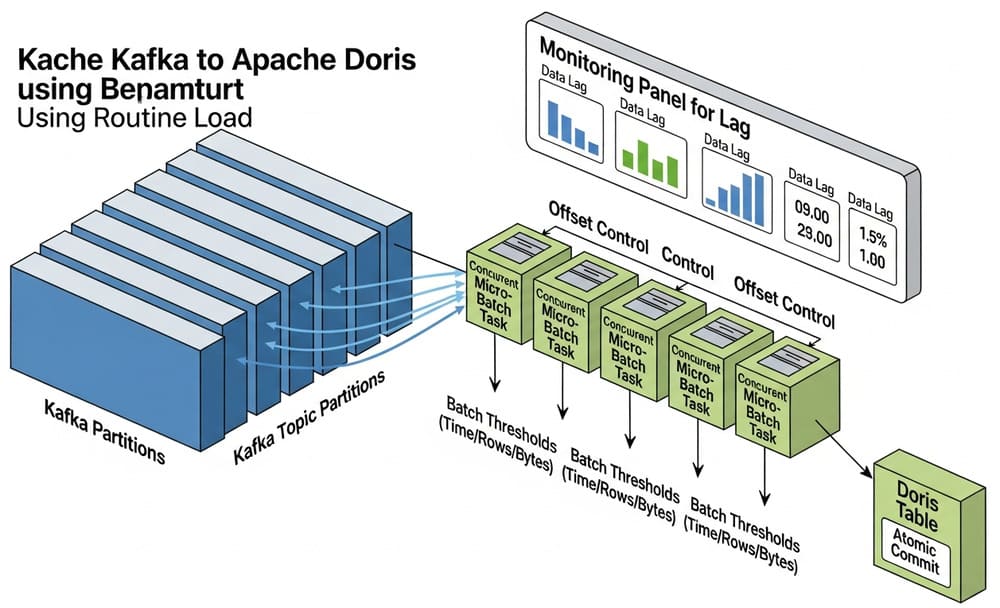
6) Ingestion & Orchestration Essentials
External stage + file format
create or replace storage integration S3_INT
  type = external_stage
  storage_provider = s3
  enabled = true
  storage_aws_role_arn = 'arn:aws:iam::123456789012:role/snowflake-access'
  storage_allowed_locations = ('s3://corp-data/prod/');

create or replace file format FF_JSON type = json strip_outer_array = true;

create or replace stage STG_PROD url='s3://corp-data/prod/'
  storage_integration = S3_INT file_format = FF_JSON;
Pipes (auto-ingest) + Tasks (scheduling)
create or replace table RAW_EVENTS (data variant);

create or replace pipe P_RAW_EVENTS as
  copy into RAW_EVENTS from @STG_PROD pattern='.*events.*\\.json'
  file_format = (format_name = FF_JSON);

-- Turn on notifications via cloud storage event in your cloud console.

create or replace task T_AGG_EVENTS
  warehouse = WH_TRANSFORM_M
  schedule = 'USING CRON 5 * * * * UTC'
as
merge into PROD.EVENTS_AGG t
using (
  select date_trunc('hour', data:ts::timestamp) as hour, count(*) as cnt
  from RAW_EVENTS group by 1
) s
on t.hour = s.hour
when matched then update set t.cnt = s.cnt
when not matched then insert (hour, cnt) values (s.hour, s.cnt);
Pitfall: Don’t run tasks on a giant warehouse “just in case.” Tasks keep warehouses warm—right-size them.
Performance Levers You’ll Actually Use
| Lever | Use When | Notes |
|---|---|---|
| Search Optimization Service | Highly selective point lookups on semi-structured or wide tables | Pay only if queries are point-heavy; not for aggregates |
| Clustering | Large tables with skewed filters/orderings | Use automatic clustering for hot tables; verify with SYSTEM$CLUSTERING_INFORMATION |
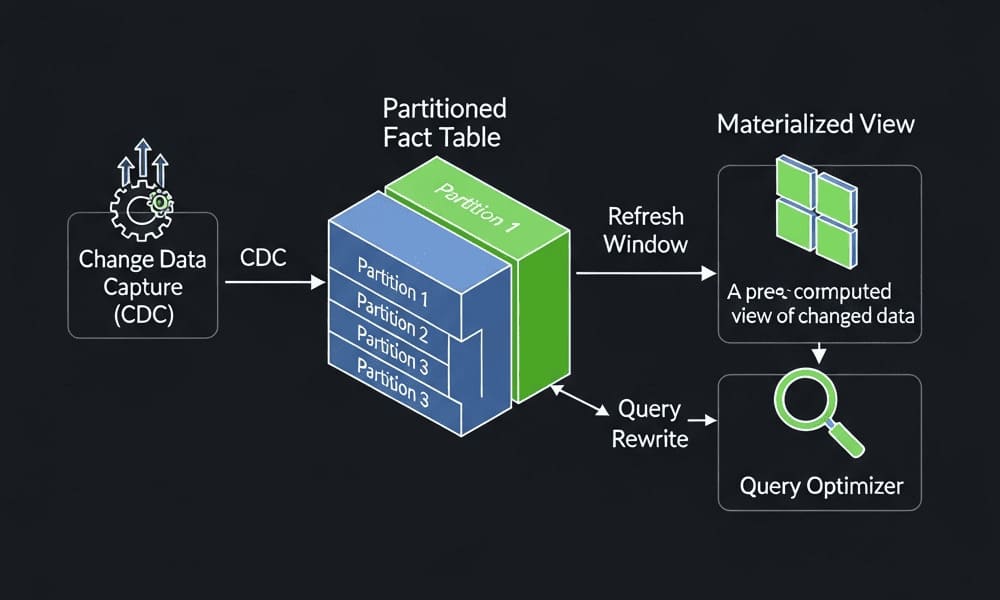
| Materialized Views | Repeated, stable aggregations | Great for BI; mind storage & refresh cost |
| Result Caching | Re-run identical queries | Encourage parameterized BI; keep TTLs in mind |
| Query Acceleration Service | Long-running scans with bursts | Adds cost; measure before/after |
Cost & Usage Observability (must-have queries)
-- Top spend by warehouse (last 7 days)
select warehouse_name, sum(credits_used) credits
from SNOWFLAKE.ACCOUNT_USAGE.WAREHOUSE_METERING_HISTORY
where start_time >= dateadd('day', -7, current_timestamp())
group by 1 order by 2 desc;

-- Longest queries (BI choke points)
select query_id, user_name, warehouse_name, total_elapsed_time/1000 sec, query_text
from SNOWFLAKE.ACCOUNT_USAGE.QUERY_HISTORY
where start_time >= dateadd('day', -7, current_timestamp())
order by sec desc limit 50;

-- Unused/idle warehouses
select name, state, auto_suspend, auto_resume, created_on
from SNOWFLAKE.ACCOUNT_USAGE.WAREHOUSES
where state = 'SUSPENDED' and auto_resume = false;
Automation idea: Push summaries to Slack/Teams daily; page on 80% resource monitor thresholds.
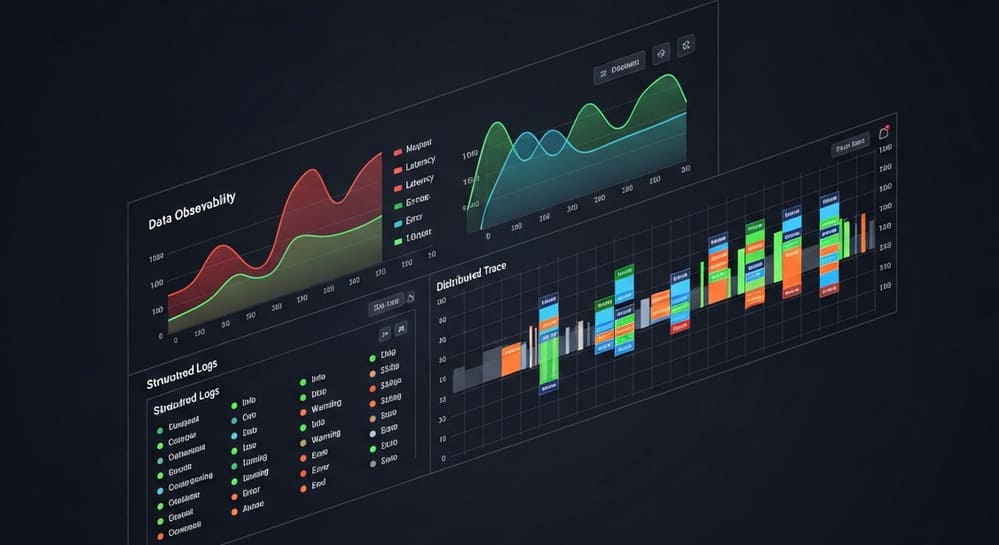
Common Pitfalls (and how to avoid them)
- One mega-warehouse for everything → Split by workload; auto-suspend aggressively.
- Granting SYSADMIN to humans → Use minimal daily roles; elevate only when needed.
- Manual PII controls → Enforce with tags + masking/row policies.
- No network policy → Lock to VPN/office IPs; block default-open.
- Forgetting resource monitors → Create them as part of warehouse creation Terraform/SQL.
- “We’ll document later.” → Store RBAC, warehouses, databases, tags in a catalog table and keep it current.
Real-World Starter Checklist (Copy/Paste to your runbook)
- Define role tree and default roles per environment
- Create workload-scoped warehouses with auto-suspend ≤ 120s
- Attach resource monitors to every warehouse
- Enforce network policy, MFA, SSO
- Create tags for sensitivity; apply masking/row policies
- Set up storage integrations, stages, pipes, and tasks
- Enable daily cost & performance reports from ACCOUNT_USAGE
- Document and version all grants/objects (SQL + IaC)
Internal Link Ideas (for your site)
- RBAC Deep Dive in Snowflake (least privilege patterns)
- Designing ELT on Snowflake with Tasks & Streams
- Data Governance with Tag-Based Masking & Row Access
- Cost Optimization: Warehouses, Monitors, and MV Trade-offs
- Search Optimization vs Clustering: When to Use Which
Conclusion & Takeaways
Snowflake doesn’t need heroics; it needs guardrails. Lock down identity and network early, standardize warehouses by workload, codify governance with policies/tags, and watch the meters with ACCOUNT_USAGE. Do that, and your platform stays predictable, secure, and affordable—without killing velocity.
Three moves this week:
- Create resource monitors and attach them to every warehouse.
- Tag PII and apply masking policies.
- Split your “one big” warehouse into ingest/transform/BI.
Image Prompt (for AI tools)
“A clean, modern admin-view diagram of a Snowflake account: layered boxes for RBAC, warehouses by workload, governance (tags/masking), network policy, and resource monitors. Minimalistic, high-contrast, isometric 3D style with subtle blue/white palette.”
Tags
#Snowflake #DataEngineering #RBAC #CostOptimization #DataGovernance #CloudData #ELT #Security #WarehouseTuning
Snowflake, DataEngineering, RBAC, CostOptimization, DataGovernance, CloudData, ELT, Security, WarehouseTuning, Observability