Databricks for Mid-Level Data Engineers: A Practical Guide to the Lakehouse (Delta Lake, Unity Catalog & Cost-Smart Scale)
Meta description (155 chars):
Databricks for mid-level data engineers: Delta Lake defaults, Unity Catalog, Auto Loader, Lakeflow Jobs, Photon—plus cost-smart patterns you can use today.
Introduction — why this matters
You’ve got growing data, stubborn pipelines, and stakeholders who want reliable dashboards and AI features yesterday. Databricks promises a single “lakehouse” that does ingestion, transformations, SQL, ML, and even vector search—without duct tape. This guide cuts through the buzz so you can ship faster, safer, and cheaper on the platform.
The Databricks Lakehouse in one picture
Think of the lakehouse as a warehouse brain sitting on a data lake body: object storage for scale + warehouse-grade governance and performance for trust and speed. Databricks implements this pattern natively. Databricks Documentation
Source systems → Auto Loader → Delta (Bronze) → DLT/Lakeflow Jobs → Delta (Silver/Gold)
                          ↑
                    Unity Catalog (governance, lineage)
                          ↓
             SQL Warehouses / Notebooks / ML / Vector Search
                       (Photon under the hood)
Core building blocks (what you’ll actually use)
- Delta Lake: Default table format with ACID transactions, time travel, schema evolution. Tables are directories of files in object storage + a transaction log. Databricks Documentation+1
- Unity Catalog: Centralized governance (catalogs/schemas/tables, privileges, lineage) across workspaces. Use three-part names and managed tables by default. Databricks Documentation+1
- Auto Loader: Incremental file discovery + exactly-once semantics for cloud storage. Great for streaming-ish ingestion without writing custom watchers. Databricks Documentation
- Lakeflow Jobs (formerly Workflows): First-class orchestration with tasks, retries, SLAs, and observability. Use for dependency graphs across notebooks, SQL, DLT, etc. Databricks Documentation+1
- Photon: Vectorized query engine that accelerates SQL/ETL at lower cost; Spark-API compatible. Turn it on and benchmark—don’t guess. Databricks Documentation+1
- Vector Search (Mosaic AI): Managed indexes plus governance integration for RAG pipelines—no sidecar vector store to babysit. Microsoft Learn+1
- Well-Architected Lakehouse: Databricks’ reference guidance on scope, principles, and trade-offs. Use it to pressure-test your design. Microsoft Learn+1
Real example — streaming-ish ingestion to Delta + merge
Below is a minimal pattern you can run as a continuous job. It uses Auto Loader to land raw files into a Bronze table and then curates them into a deduped Silver table with MERGE:
Ingest (PySpark)
from pyspark.sql.functions import *
raw_path = "s3://your-bucket/raw/events/"
checkpoint = "s3://your-bucket/_chk/events/"

df = (spark.readStream
      .format("cloudFiles")
      .option("cloudFiles.format", "json")
      .option("cloudFiles.inferColumnTypes", "true")
      .load(raw_path))

(df.writeStream
   .format("delta")
   .option("checkpointLocation", checkpoint)
   .trigger(availableNow=True)      # batch-like, or use .trigger(processingTime="1 minute")
   .toTable("main.raw.events_bronze"))
Auto Loader provides the cloudFiles source and tracks ingestion state in a checkpoint so you don’t reprocess files. Databricks Documentation+1
Curate (SQL)
-- Silver table with idempotent upserts
CREATE TABLE IF NOT EXISTS main.curated.events_silver
  (event_id STRING, ts TIMESTAMP, user_id STRING, payload STRING)
  USING DELTA;

MERGE INTO main.curated.events_silver AS s
USING (
  SELECT event_id, ts, user_id, payload
  FROM main.raw.events_bronze
) AS b
ON s.event_id = b.event_id
WHEN MATCHED AND b.ts > s.ts THEN UPDATE SET *
WHEN NOT MATCHED THEN INSERT *;
Delta’s ACID guarantees make MERGE reliable at scale; Delta is the default format for tables on Databricks. Microsoft Learn+2Microsoft Learn+2
Architecture & modeling — what “good” looks like
- Multi-hop (Bronze/Silver/Gold) with clear SLAs per layer; managed tables in Unity Catalog; three-part names (
catalog.schema.table) to avoid shadowing and permission confusion. Databricks Documentation - Small files are poison: coalesce upstream; use
OPTIMIZEon heavy read tables; use partitioning sparingly (by low-cardinality columns like date). - Photon everywhere you can for SQL/ETL and dashboards; validate with A/B cost/perf comparisons. Databricks Documentation
- Orchestration boundaries: use Delta Live Tables for declarative quality and lineage, and Lakeflow Jobs for cross-system graphs and scheduling. Databricks+1
- Governance first: privilege model in Unity Catalog, plus lineage to track blast radius; don’t ship unmanaged tables. Databricks Documentation
- AI-ready: materialize embeddings from curated data; use Vector Search for retrieval with UC governance. Microsoft Learn
Best practices & common pitfalls
Best practices
- Default to Unity Catalog managed Delta tables; use three-part names in all code and BI connectors. Microsoft Learn+1
- Prefer Auto Loader for file-based ingestion over ad-hoc
spark.readloops. It handles discovery, schema drift, and checkpointing. Databricks Documentation - Benchmark with Photon—enable it and measure cost/query time before and after. Databricks Documentation
- Treat Jobs as code: versioned notebooks/SQL, parameterized tasks, retries/timeouts, and alerts. Databricks Documentation
- Document SLAs per hop (latency, freshness, data quality rules) and enforce via DLT expectations.
Pitfalls
- Over-partitioning (e.g., by user_id) → too many small files → slow reads.
- Skipping
OPTIMIZE/maintenance on read-heavy Delta tables. - Building pipelines without catalog governance → permission sprawl and surprise 403s. Databricks Documentation
- Using custom file pollers instead of Auto Loader; you’ll reinvent checkpoints badly. Databricks Documentation
Performance & cost levers (quick hits)
- Photon + SQL Warehouses or clusters for vectorized execution on ETL/BI. Databricks Documentation
- Prune data early; optimize file sizes (~128–512 MB per file) and compact frequently read tables.
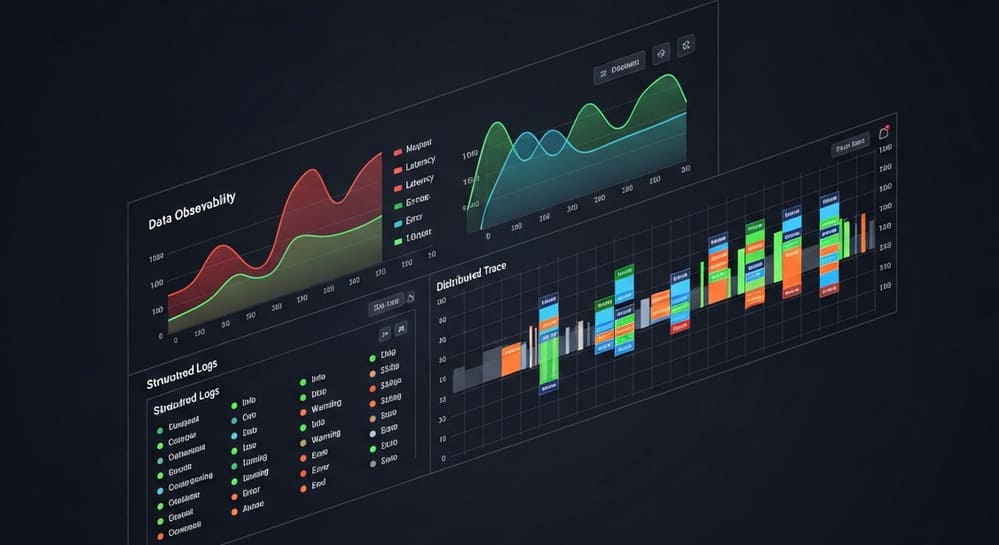
- Cache only where it moves the needle; monitor with built-in observability in Lakeflow Jobs. Databricks Documentation
Internal link ideas (official docs only)
- What is a Lakehouse? (Databricks) Databricks Documentation
- Delta tables & ACID guarantees Databricks Documentation+1
- Unity Catalog overview & getting started Databricks Documentation+1
- Auto Loader (ingestion) Databricks Documentation
- Lakeflow Jobs (orchestration) Databricks Documentation
- Photon engine overview Databricks Documentation
- Mosaic AI Vector Search Microsoft Learn
- Well-Architected Lakehouse guidance Microsoft Learn
Conclusion — what to do next
If you’re mid-level and time-strapped, start simple: Auto Loader → Delta Bronze/Silver → Jobs orchestration → Photon on. Wrap it in Unity Catalog from day one. Once stable, layer in quality (DLT) and retrieval (Vector Search). You’ll feel the impact in reliability, speed, and cloud bill sanity.
Takeaways
- Databricks is a governed, performant lakehouse—not just “Spark on a cluster.”
- Delta + UC are your defaults; Auto Loader + Jobs are your pipeline backbone.
- Photon is a knob worth turning; verify with data.
- Design for operability (SLAs, lineage, maintenance), then add AI.
Image prompt (for DALL·E/Midjourney)
“A clean, modern isometric diagram of a Databricks lakehouse: cloud object storage feeding Auto Loader into Delta (Bronze/Silver/Gold), governed by Unity Catalog, orchestrated by Lakeflow Jobs, with Photon accelerating SQL and a Vector Search service connected for RAG—minimalistic, high contrast, annotated nodes.”
Tags
#Databricks #DeltaLake #UnityCatalog #Lakehouse #DataEngineering #ApacheSpark #ETL #Photon #VectorSearch
More Articles to read:
- “Unity Catalog in Practice: From Messy Buckets to Governed Tables in 60 Minutes” — unity catalog databricks, data governance, lineage
- “Auto Loader vs. DIY Ingestion: Cost, Latency, and Reliability Benchmarks” — databricks auto loader, incremental file ingestion Databricks Documentation
- “Lakeflow Jobs Playbook: Orchestrating Mixed SQL, DLT, and Notebook Pipelines” — databricks jobs orchestration, workflows Databricks Documentation
- “Photon for ETL: When It Helps, When It Doesn’t, and How to Prove It” — databricks photon performance, spark sql acceleration Databricks Documentation
- “Designing a Well-Architected Databricks Lakehouse: Ten Decisions That Matter” — well-architected lakehouse, databricks architecture Microsoft Learn
- “From Bronze to Gold: A Medallion Architecture You Can Actually Operate” — medallion architecture, delta lake modeling
- “RAG on Databricks: Production Patterns with Mosaic AI Vector Search” — databricks vector search, rag architecture Microsoft Learn
- “Delta Lake Troubleshooting Field Guide: Small Files, Schema Drift, and MERGE Conflicts” — delta lake best practices, databricks optimize Databricks Documentation
- “Liquid Clustering vs Partitioning vs Z-ORDER: How to Choose in 2025” — Clear migration playbooks and cost/perf trade-offs (with before/after benchmarks).